Acephate
- Detection Rate
- 12.2%
- Benchmark Usage
- 37.1%
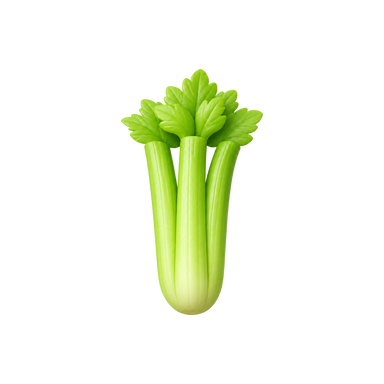
Celery has a pesticide load score of 99 and a Food Compass 2.0 score of 100, based on 3,433 monitoring samples.
Preparation & Safety
Because celery has higher surface permeability, synthetic pesticides easily adhere to the skin. To reduce exposure by up to 80–90%, soak in a 1% baking soda water solution (1 tsp baking soda per 2 cups cold water) for 12 to 15 minutes, then rinse vigorously under running water.
Market Comparison
| Market | Load Score | Samples Tested | Detection Rate | Reliability |
|---|---|---|---|---|
| US | 95 | 2,825 | 90.3% | ✓ Solid (2825) |
| DE | 80 | 116 | 70.7% | ✓ Solid (116) |
| FR | 100 | 37 | 75.7% | ✓ Solid (37) |
| IT | 94 | 92 | 89.1% | ✓ Solid (92) |
| ES | 98 | 16 | 62.5% | ⚠️ Sparse (16) |
| CA | 88 | 347 | 79.5% | ✓ Solid (347) |
⚠️ Data Note: Markets marked with Sparse have under 30 official laboratory samples in the public record. A 0% detection in sparse tests does not guarantee absolute absence of residue in that region.
Chemical Residue Breakdown
Public Evidence Trail
Explore Peer Produce